
Have you ever wondered if the electricity powering your home is AC or DC current? Understanding this can help you make smarter decisions about your appliances, energy use, and even safety.
Knowing the difference between these two types of current isn’t just for engineers—it’s something that affects your daily life. Keep reading, and you’ll discover which current flows through your walls and why it matters to you. This simple knowledge could change how you think about the energy in your home.
Credit: www.renogy.com
Ac Vs Dc Basics
Electricity powers our homes and devices. Two main types are AC and DC currents. Understanding these helps explain how electricity works in daily life.
This guide covers the basics of alternating current and direct current. You will see their differences and common uses.
What Is Alternating Current
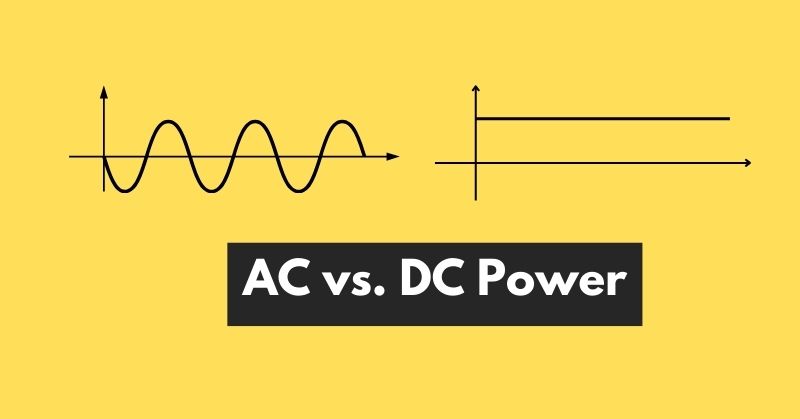
Alternating Current (AC) changes direction many times per second. The electric charge flows back and forth in a circuit. AC is used in homes and businesses for power supply.
What Is Direct Current
Direct Current (DC) flows in one direction only. The electric charge moves steadily from the power source to the device. Batteries and solar panels provide DC power.
Key Differences Between Ac And Dc
| Feature | Alternating Current (AC) | Direct Current (DC) |
| Flow Direction | Changes direction periodically | Flows in one direction only |
| Common Uses | Powering homes, businesses | Batteries, electronic devices |
| Voltage Type | Varies continuously | Constant voltage |
| Transmission | Efficient over long distances | Less efficient over long distances |
| Waveform Shape | Usually sinusoidal | Usually flat line |
Electricity In Homes
Electricity powers almost everything in our homes. It makes lights work and runs appliances. But not all electricity is the same.
Most homes use a type of electricity called alternating current or AC. This article explains why AC is used, the role of power companies, and how electricity reaches your house.
Why Homes Use Ac
AC or alternating current changes direction many times each second. This type of current is easier and cheaper to send over long distances. It also works well with transformers that change voltage levels.
- AC can travel far without losing much power.
- It is simple to increase or decrease voltage.
- Many home devices are designed to use AC.
- AC helps keep electricity safe and efficient.
Role Of Power Companies
Power companies create and send electricity to homes. They use large power plants that produce AC power. These companies maintain the wires and equipment that bring power to your neighborhood.
| Power Source | Examples |
| Fossil Fuels | Coal, natural gas, oil |
| Renewable | Solar, wind, hydro |
| Nuclear | Uranium reactors |
How Ac Is Delivered To Residences
Electricity travels from power plants through many steps before it reaches homes. Transformers change voltage to keep power safe for home use. Wires carry electricity from substations to houses.
- Power plants generate AC electricity.
- High voltage lines carry power long distances.
- Substations lower voltage for neighborhoods.
- Distribution lines send electricity to homes.
- Electric meters measure power used.
Devices And Current Types
Many homes use two types of electric current: AC and DC. Each type powers different devices.
Understanding which devices use AC or DC helps in choosing the right power sources and adapters.
Appliances Using Ac
Most household appliances run on alternating current (AC). This current changes direction regularly.
- Refrigerators
- Washing machines
- Microwave ovens
- Air conditioners
- Electric ovens
- Lighting fixtures
Electronics Using Dc
Many electronic devices use direct current (DC). This current flows in one direction only.
| Device | Power Source |
| Smartphones | Battery (DC) |
| Laptops | Battery or Adapter (DC) |
| LED Lights | DC Power |
| Tablets | Battery (DC) |
| Electric Vehicles | Battery (DC) |
Converters And Adapters
Converters and adapters change current from AC to DC or vice versa. They help devices run safely.
Common converter types:
- AC to DC adapters for charging electronics
- DC to AC inverters for power tools or appliances
- Voltage converters to match device needs

Credit: www.eastherelectrical.com.au
Advantages Of Ac In Homes
Most homes use alternating current (AC) for their electricity. AC offers many benefits that make it suitable for home use. It is easy to transmit and safe for everyday appliances.
Understanding why AC is preferred helps us see how electricity works in homes. It also shows why AC is better than direct current (DC) in many ways.
Efficient Transmission Over Distances
AC can travel long distances without losing much power. This is because its voltage can be easily changed with transformers. High voltage reduces energy loss when electricity moves from power plants to homes.
- Transformers change AC voltage up or down
- High voltage means less energy lost as heat
- Electricity can reach homes far from power plants
Safety Considerations
AC is safer for home use because it stops flowing when a circuit breaks. Many home devices are designed to work with AC. It reduces risks of electric shocks compared to some DC setups.
AC also allows easy use of circuit breakers and fuses. These devices protect homes from electrical faults by cutting off power quickly.
Cost And Infrastructure Benefits
AC systems are cheaper to build and maintain. Power plants and home wiring use standard AC equipment. This lowers the overall cost for electricity supply.
- AC wiring materials are widely available
- Standard devices reduce installation costs
- Easy to connect homes to the power grid
Future Trends In Home Electricity
Electricity in homes is changing fast. New ideas and tools make power use smarter and cleaner.
This article looks at how solar power, smart homes, and new power systems will shape home electricity.
Rise Of Solar Panels And Dc Power
Solar panels create direct current (DC) electricity from sunlight. Many homes use this power every day.
- Solar panels produce DC power naturally.
- Many devices like LEDs and batteries also use DC power.
- Using DC power directly can reduce energy loss.
- More homes add solar panels to save energy.
Smart Homes And Hybrid Systems
Smart homes use technology to control electricity better. Hybrid systems mix AC and DC power for efficiency.
| Feature | Description |
| Smart Thermostats | Adjust temperature to save energy |
| Energy Storage | Store solar power in batteries |
| Hybrid Inverters | Convert AC to DC and back |
| Remote Control | Manage devices from anywhere |
Potential Shift To Dc In Residential Areas
Many home gadgets run on DC power. Switching homes to DC can save energy and reduce costs.
Benefits of DC power in homes:
- Less energy lost in conversion
- Better for solar and battery systems
- Safer low-voltage systems
- Simpler wiring for modern devices

Credit: www.jackery.com
Frequently Asked Questions
Are Home Electrical Systems Ac Or Dc?
Homes primarily use alternating current (AC) because it is efficient for long-distance power transmission. AC allows easy voltage changes using transformers, making it ideal for residential electricity.
Why Is Ac Preferred Over Dc In Homes?
AC is preferred due to its ability to travel long distances with minimal energy loss. It also simplifies voltage conversion, making it safer and more efficient for household appliances.
Can Homes Run On Dc Power Instead Of Ac?
While homes can use DC power, it is uncommon and less practical. Most appliances and infrastructure are designed for AC, making DC systems expensive and complex to implement.
How Does Ac Power Benefit Household Appliances?
AC power enables appliances to operate efficiently with standardized voltage levels. It supports motors and transformers essential for devices like refrigerators, air conditioners, and lighting systems.
Conclusion
Homes use AC current because it travels easily over long wires. AC power lets devices work safely and efficiently. Most household appliances need AC to function well. DC current is common in batteries and small electronics. Knowing this helps you understand how electricity powers your home.
Electricity keeps daily life running smoothly and safely. Simple, reliable AC current is why homes stay bright and warm.